
 No products in the cart.
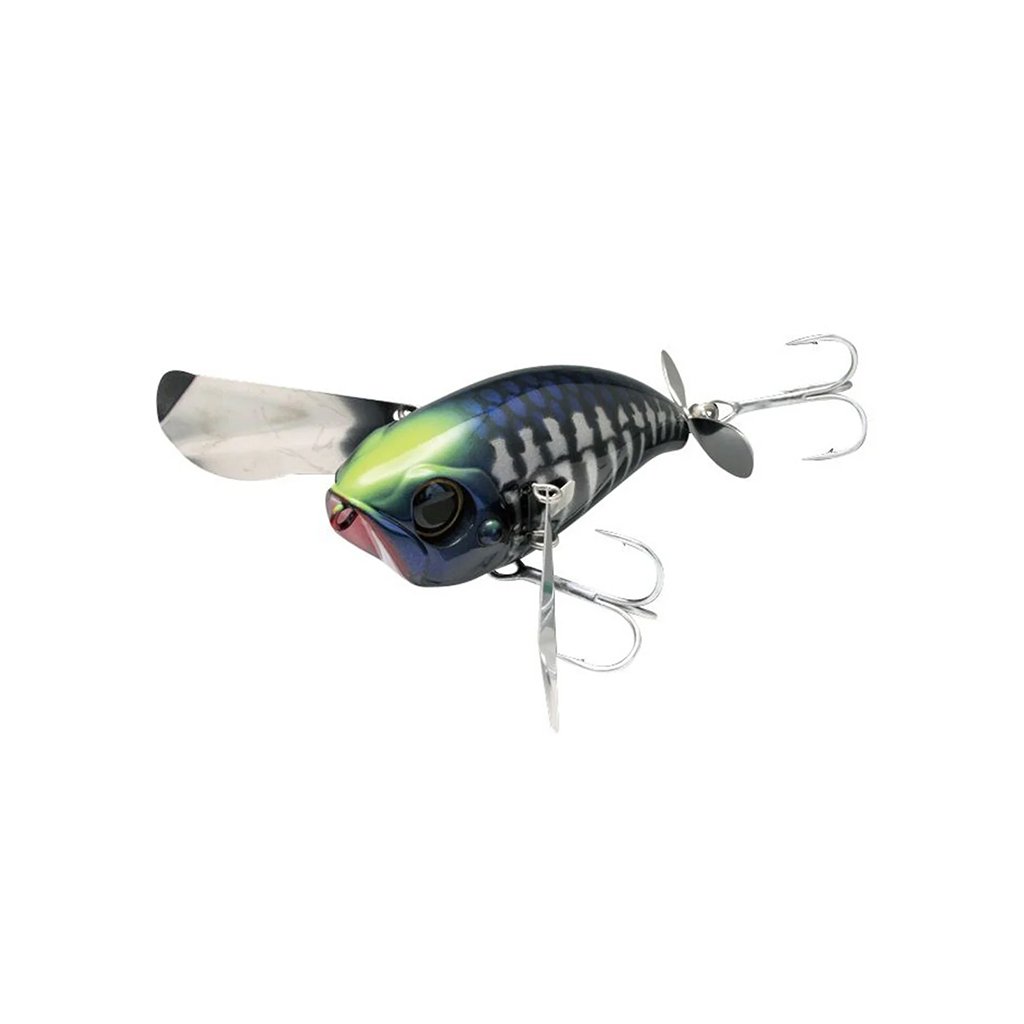
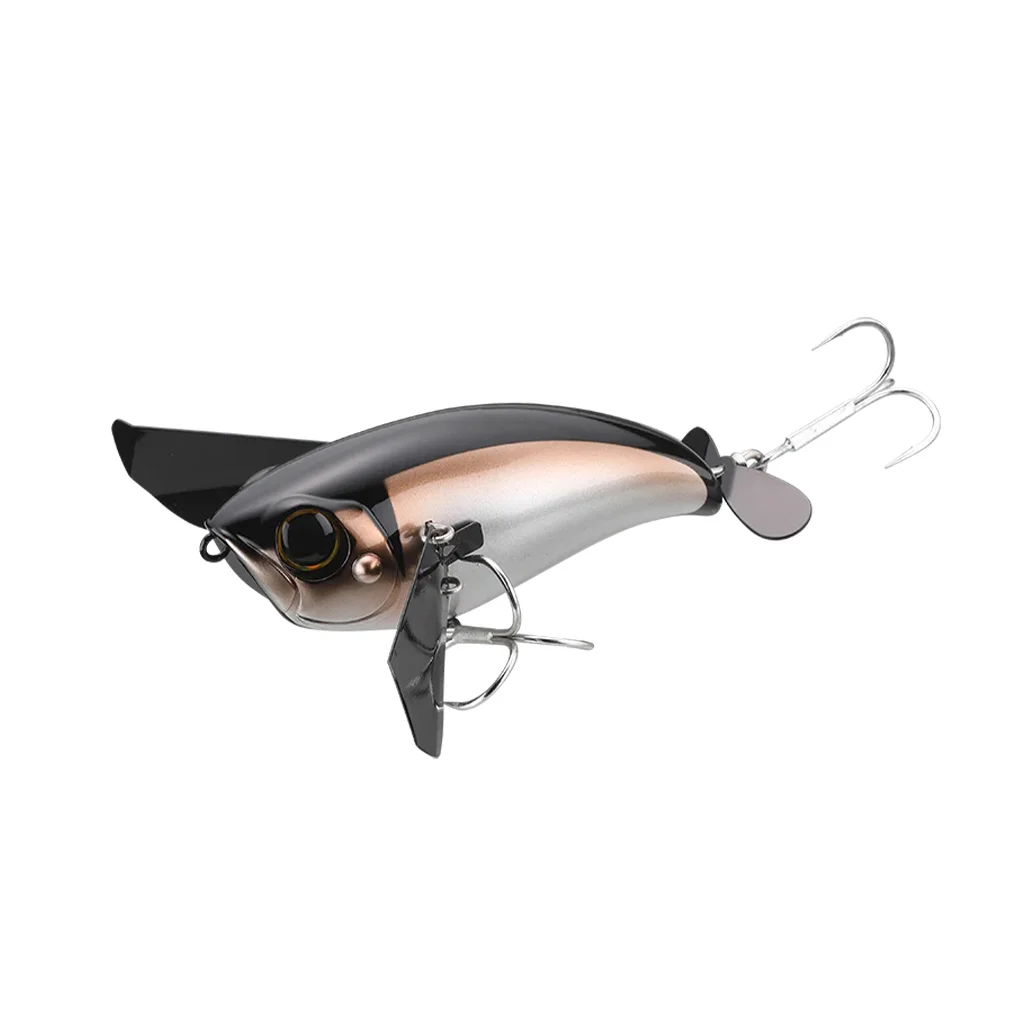
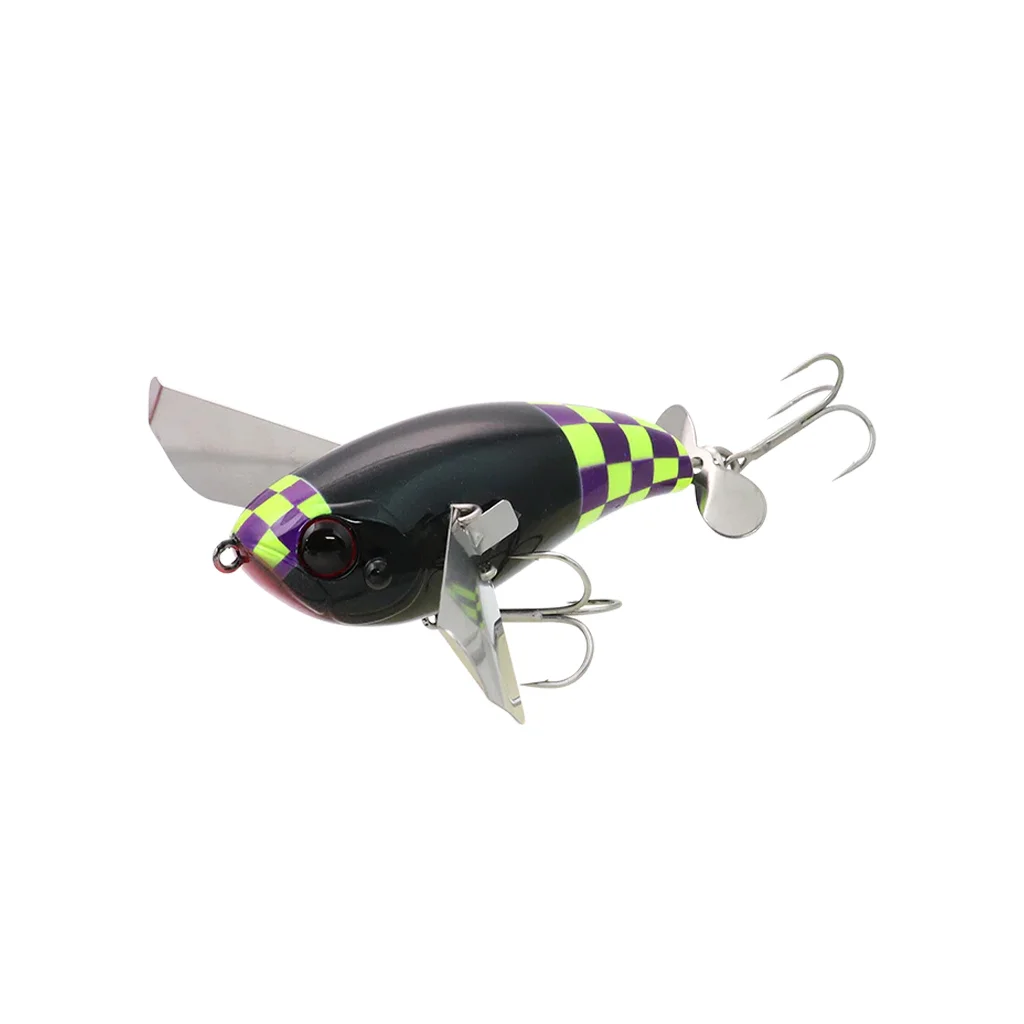
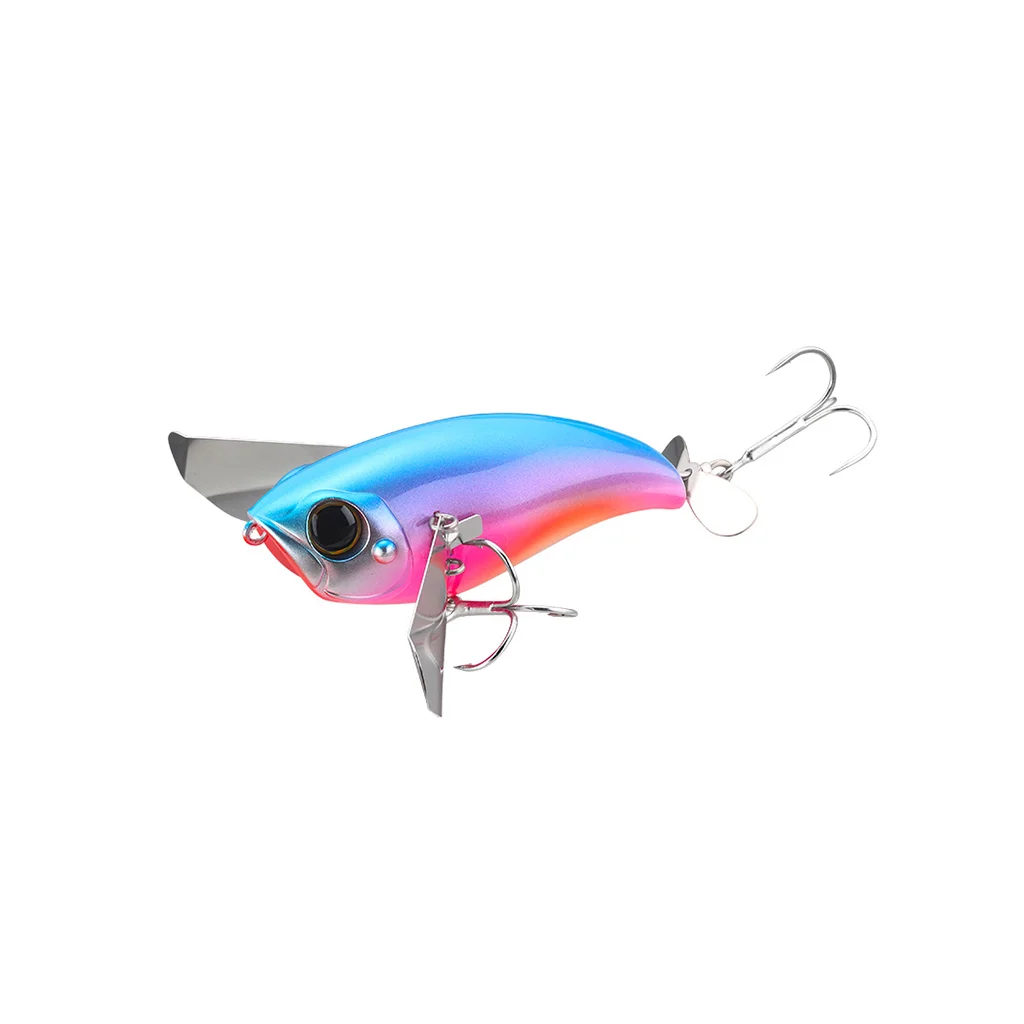
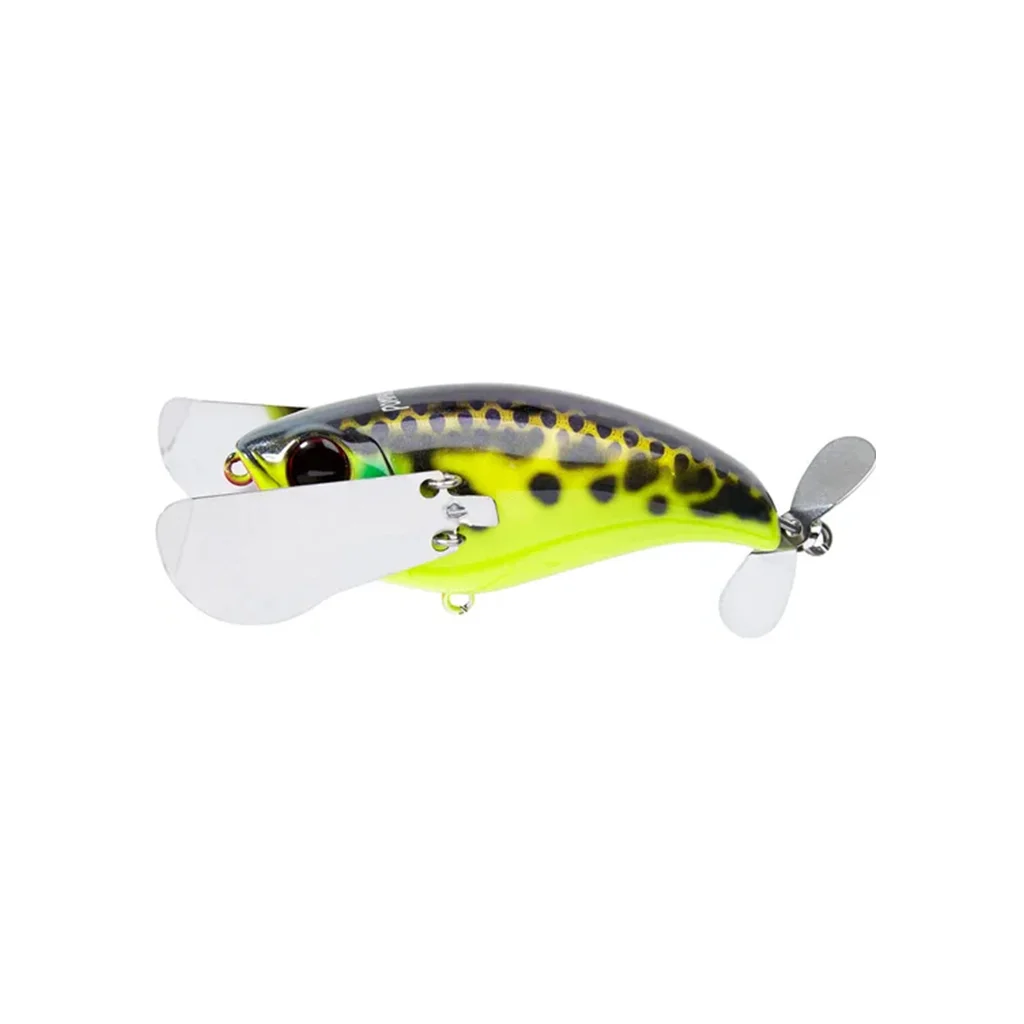
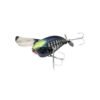
Jackall Pompadour Jr. Topwater Crawler
CA$40.99
Description
Jackall Pompadour Jr. Technical Specifications
| Specification | Details |
|---|---|
| Length | 2.6 inches / 66 mm |
| Weight | 18 grams (approx. 5/8 oz) |
| Type | Topwater Crawler / Noisy Surface Lure (Floating) |
| Wing Tech | Custom Folding Metal Wings (Aerodynamic Flight Tuned) |
| Tail Accent | Jointed Body Segment + Free-Swinging Prop & Rear Hook |
| Target Species | Largemouth Bass, Smallmouth Bass, Northern Pike |
The Mechanical Waddling Crawl: Why the Pompadour Jr. Triggers Monsters
Standard topwater baits either pop subtly or walk silently, which can sometimes fail to pull big bass up from deep, heavy mat cover. The Jackall Pompadour Jr. handles this via raw, structural commotion. Hand-tuned by Jackall’s JDM engineering team, its dual folding metal side wings scoop water alternately, causing the body to radically tilt and “waddle” across the surface film like a struggling cicada, bird, or rodent trapped in the shallows.
Unlike old-school crawler baits that are clumsy to cast, the Pompadour Jr.’s wings fold flush along the frame during flight, eliminating wind resistance to unlock booming, long-distance casts. The moment it slaps the water, the wings pop open instantly. Coupled with a jointed tail section and a rear signature prop, it outputs a multi-layered acoustic blueprint: metallic wing splashing, internal rattle clicking, and rear prop plopping.
Pro Guide: Rod Actions and Line Tension for Crawler Fishing
- The Ideal Rod Build: A 6’10” to 7’3″ Medium-Heavy power casting rod with a Regular or Moderate-Fast action blank. Avoid extra-fast, stiff carbon tips. A slightly slower rod bend allows the bass to fully inhale the bait and turn around before the hooks sink home, ensuring a vastly superior hook-up ratio.
- Line Selection (Crucial Choice): Spool up with 30–50 lb Braided line or 14-17 lb Monofilament line. Monofilament offers excellent shock absorption for violent, explosive surface strikes. Straight braid provides the raw muscle needed to steer fish away from thick logs, lily pads, or docks. Never use Fluorocarbon; its sinking properties pull the nose down, locking the wings closed and preventing the bait from crawling.
3 Tactical Cadences to Master the Surface Commotion
- The Ultra-Slow Creep (Cold Mornings / Low Light): Reel at the slowest speed possible while keeping the line taut. The Pompadour Jr. will execute a subtle, high-pitch waddle, making the metal wings “click” gently. This is incredibly lethal for smart, trophy largemouth bass investigating shade lines.
- The Steady Churn (Windy Ripple / Active Fish): Retrieve at a steady, medium clip. The wings will throw up alternating side splashes while the rear prop spins frantically, cutting through surface chop and drawing fish up from deep submerged timber.
- The Twitch, Slap & Pause (Target Shooting): Cast tight against a dock piling or flooded bush. Give one sharp rod twitch to snap the wings open with a loud splash, then let it sit completely still for 3 to 5 seconds. The trailing jointed tail hook will sway in place, forcing lazy fish to hit.
Frequently Asked Questions About Jackall Pompadour Jr.
Q1: Jackall Pompadour Full-Size vs. Pompadour Jr.: How do I choose?
A: Base your selection on rod power and target water size. The Full-Size Pompadour (3.1″, 3/4 oz) is a heavy topwater tool that requires heavy-power rods and targets big open waters or massive gator-bass. The Pompadour Jr. (2.6″, 18g/approx. 5/8 oz) hits the sweet spot for standard Medium-Heavy bass rods. It casts more accurately around tight targets like docks, can be thrown easily on smaller ponds, and perfectly matches standard mid-summer cicada and frog forage sizes.
Q2: Why are the metal wings on my Pompadour Jr. closing up or tracking crooked?
A: This is nearly always due to using Fluorocarbon line or catching a piece of floating weed in the front line-tie. Fluorocarbon sinks and forces the nose down, which stops the water from hitting the wings correctly. Always run the Pompadour Jr. on Braided line or Monofilament. If you collide hard with a rock and a wing gets bent, gently use pliers to realign it symmetrically with the other side.
Q3: Is the Pompadour Jr. effective for night fishing or muddy water?
A: It is one of the single most effective night baits ever created. Because fish cannot see well in muddy water or total darkness, they rely entirely on their lateral line system to hunt. The alternating wing slaps, internal rattles, and spinning tail prop on the Pompadour Jr. create an aggressive, multi-layered vibrational pulse that allows bass to track and locate the bait effortlessly without any visual aid.
Reviews
There are no reviews yet.